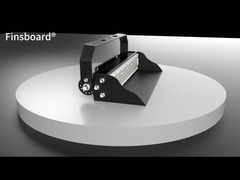
View Intrinsically Safe Explosion Proof Linear Light AC100V-265V Demo

Other Videos
December 11, 2025
Brief: Need quick answers about practical use? This video highlights the essentials. Watch a detailed demonstration of the Intrinsically Safe Explosion Proof Linear Light AC100V-265V, showcasing its operation in hazardous environments, key safety features, and real-world performance insights for industrial applications.
Related Product Features:
  • Delivers high-efficiency brightness with 100-110lm per watt for optimal lighting with minimal energy consumption.
  • Features a strict explosion-proof design meeting Exd IIC T6-IP65-WF2 standards for hazardous gas environments.
  • Equipped with reliable SMD2835 LED chips for stable light output and extended service life.
  • Offers IP65 waterproof and WF2 dustproof ratings for reliable performance in humid and dusty conditions.
  • Available in 50W and 100W power options to suit different industrial lighting requirements.
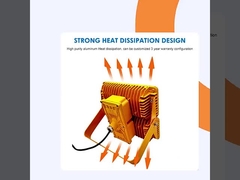
  • Constructed from aluminum and tempered glass with die-cast fin heat dissipation for efficient thermal management.
  • Supports AC100-265V voltage input for broad compatibility with various power systems.
  • Comes in yellow or gray finishes, combining practicality with aesthetic appeal for industrial settings.
Faqs:
  • What safety standards does this explosion-proof linear light meet?
    It complies with the Exd IIC T6-IP65-WF2 standard, ensuring a high level of explosion-proof protection, waterproofing, and dust resistance for hazardous gas environments.
  • What are the available power and size options for this light?
    The light is available in 50W (670*133*66mm) and 100W (1240*133*66mm) models to accommodate different industrial lighting needs and space constraints.
  • How does the heat dissipation technology enhance the light's performance?
    It uses die-cast fin heat dissipation and a high-conductivity aluminum substrate to rapidly conduct heat away from the LED source, maintaining a lower operating temperature and effectively extending the light's lifespan.